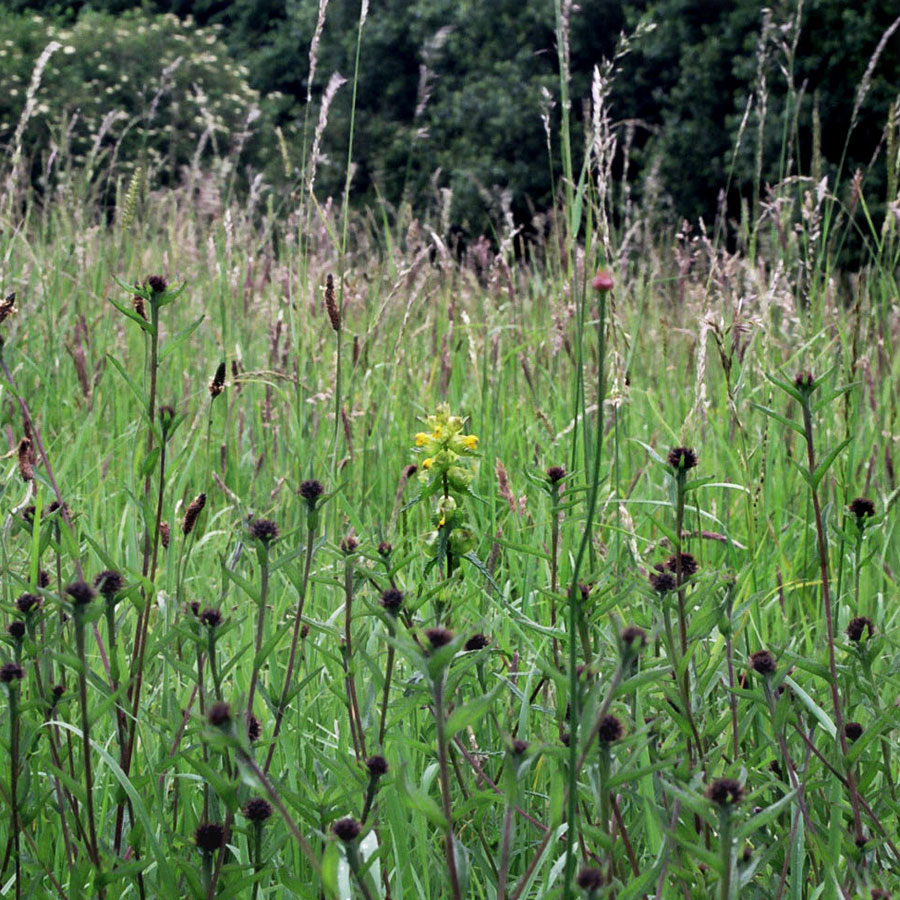
 It’s 1984 and three years into motherhood and although Orwell’s Big Brother hadn’t quite materialised we were five years into the reign of Margaret Thatcher, but here I’ll grudgingly admit she managed to do one good thing for our family. In order to camouflage escalating unemployment figures a number of job creation schemes were initiated by her government. I was employed on one as a photographer for a project based in the Natural History department of Bristol’s Museum. The schemes initially provided a year-long contract for three days a week and as my partner was taken on in a project for another organisation, childcare was manageable. This project was to create a Flora of the county of Avon; a flora is a traditional form of documentation and mapping of the botanical species in a given area, in the UK it was often by county, and as Avon was only formed in 1974 it didn’t have one of its own. Avon ceased to exist in 1996 as a political entity, however all the records made are still held (and regularly updated) by BRERC that covers the same area.
The project was dreamed up and led by a lovely man (tragically dying a few years later, far too young) who was irrepressibly enthusiastic about the natural world specifically, and life in general and it was probably the most enjoyable photographic work I’ve ever done, and, certainly one of the most inspiring jobs I’ve ever had. The team were mostly young, unemployed graduates in various fields of biology and we went out in small groups covering sections of the county to make written and photographic records, focusing mainly on plants and habitat types, but also sometimes invertebrates and birds. All fascinating and valuable information in its own right, discovering and photographing the fantastic range of all these subjects in our small county was a personal revelation. But significantly the work we did also provided (and still does) essential data for use in the protection of landscapes against development.
I’d enjoyed ambling around the countryside since I was a kid and over the years gradually became more aware of plants, animals, insects and geology, but had no training in these subjects. However, the enthusiasm, humour and breadth of knowledge of ‘Our Leader’ were inspirational. Through him and my scientific colleagues I learnt so much about the natural environment: discovering the concept of ecological succession (the gradual process by which ecosystems change over time – nothing remains the same and habitats are constantly changing) was a revelation. I had no idea that (broadly speaking) through this process a lake will inevitably dry out, be a marsh for a while, ‘pioneer’ species of plants and trees will become established, followed by a succession of other plants that have outcompeted the earlier ones, and eventually (maybe 200 or more years later) the site will become a woodland – the climax community of plants.
This shifted my perception of the world into a far more dynamic state than I had previously thought existed. Another ecological surprise to me was finding that some plant species can indicate soil types, and sometimes the recent use, or history of the site they’re growing in, this can help build a picture of the past, or to anticipate what may emerge in future, and in some circumstances become grounds for preserving a site.
Although I knew the names of a few wild plants, picked up from my mum and grandmother during childhood, my internal database expanded enormously as I went out with my botanical colleagues (although remembering their Latin names was a challenge, but, 40 years on I can still remember a few!). The process of learning the names of plants becomes an appetite; as the Victorian naturalist, Richard Jefferies says “[my] first conscious thought about wild flowers was to find out their names – the first conscious pleasure – and then I began to see so many that I had not previously noticed. Once you wish to identify them nothing escapes”. Then, you do begin to have a different relationship with them, you get to know them a little, and can begin to see their connections to their relatives, or how they behave with their neighbours (equable, dominating, struggling) and gain a clearer understanding of the habitats they’re living in.
Familiarity with communities of plants or particular habitats can lead to an understanding of the birds, mammals or invertebrates that make this their home, then, when you visit a new, similar location your vision has been sharpened for seeking out the range of wildlife you might hope to see (each person becomes fond of certain plants – I especially like small-flowered, ground-hugging species like eyebright and milkwort), or you’ll be better equipped to find something unusual.
Developing an awareness of differing localities, along with these close observational skills, revealed a layer of the world previously undefined to me; once you’ve tuned in to where you are – whether it’s a woodland, urban scrubland or a clifftop path – it’s no longer just greenery and hills, it can seem as if you’ve entered an extra dimension, that you have a sense of being part of because you know at least a little about the framework and its ‘inhabitants’. By the end of this year the knowledge I’d acquired allowed me to not just photograph plants but contribute to the survey recordings alongside the ‘proper’ botanists, a most gratifying achievement.
The times I spent, for example, lying on leaf litter in the woods to photograph broad leaved helleborines (Epipactis helleborine), kneeling in a damp meadow to record ragged robin (Lychnis flos-cuculi), and battling the wind on a rocky hilltop to capture rock roses (Helianthemum nummularium) were an enormous, and memorable pleasure. The experiences of this job have enriched my everyday life permanently and immeasurably – even a brief walk to the shops can reveal some intriguing bird activity or seasonal change in the pavement weeds I wouldn’t have noticed before this watershed of learning.
Additionally the skills and experience I’d acquired – although I was no expert – provided me with sufficient understanding to work as a freelance photographer over the ensuing years on a whole range of projects that contained an environmental or wildlife element. Work with schools, poster and exhibition design for BTCV, and various other projects for Bath City Council, the National Trust and most recently the Local Journeys Wildlife Safaris in spring and summer, and the Lamplighter’s Marsh plant project. All these have been made possible because of this one year of employment with fine team of people; with reluctant thanks to the late Iron Lady!


 Liz Milner