
Hartcliffe and Withywood Dad’s breakfast Club / Champloo B-boy and B-girl
I’ve been working on some freelance commissions for Bristol’s new museum and produced two sets of short films/digital stories sporting and family stories… Continue reading
Hartcliffe and Withywood Dad’s breakfast Club / Champloo B-boy and B-girl
I’ve been working on some freelance commissions for Bristol’s new museum and produced two sets of short films/digital stories sporting and family stories… Continue reading
Really absorbing exhibition at Royal Academy – “Brassaï, Robert Capa, André Kertész, László Moholy-Nagy and Martin Munkácsi each left Hungary to make their names in Germany, France and the USA, and are now known for the profound changes they brought about in photojournalism, as well as abstract, fashion and art photography.”
First photography exhibition there for years and full of luminous prints (not so sparkling towards the chronological end of the show though) and intense images in a whole range of genres reflecting the country’s troubled shifts of politics and an identifiable eastern European preoccupation with form and design.
Good review here by Laura Cumming, Observer.
Some real gems on this site, including this revealing online gallery – John Loengard: Celebrating the Negative, my favourite is Cartier Bresson’s Gare St Lazare.
The revelation for me was that you can see how much of the negative has been cropped at the bottom and left side in the prints of this familiar and iconic image – I was at a photography college (a long, long time ago) where the frame was sacrosanct – you didn’t crop, you put your negative in a holder that was a bit larger than than the neg size and allowed the light passing through the clear rebate to create a dense black frame round your image to prove you had kept it intact; a curious form of celibacy; took me years to reject the concept.
By contrast, but a great companion to the above – less ‘fine photography’ but lots of fun, and food for thought: Red Bubble recreates famous photographs – with lego
It’s taken me years to understand that something that has significant creative appeal for me is ‘the particular’. I’d grappled unhappily with a comparable, but oppositional concept – ‘the transcendent’ on a photographic course years ago (another time) but it was only recently that I began to read more thoroughly about the work of artists I have long admired and saw the unifying qualities they shared. One writer who’s illuminated this route for me is Ian Jeffrey (can’t find sensible link for the man – suggestions welcome) whose succinct insights are delivered in a thoroughly readable, and often wry style, not tethered to impenetrable cultural theories, but fluid observations of artists’ work in the context of their time and place. Continue reading

A section of the montaged artwork created from photographs taken by young people from Westhaven and Aschcome schools for the ‘Tyntesfield through the lens’ project.
I worked with the National Trust’s learning officer at Tyntesfield (in conjunction with the North Somerset Find Your Talent initiative) to devise and deliver a workshop over 3 sessions at the house and estate. The participants were Year 6 children from Ashcombe Primary school, and GCSE Photography students from Westhaven special needs Secondary school who were to mentor the younger pupils. The older students came on their own for a first visit to see the house and gardens, learn about some of the history and take photographs of their own, but with our support they also planned how they would guide the younger pupils round the house and estate on the following visit and help them to use cameras to create a ‘portrait’ of Tyntesfield. Continue reading
A strand of work that’s parallel to documenting artists and makers is photographing actors, dancers and artists’ performance-based work in the Bristol area – some examples follow…

For Theatre Orchard Project – ‘I Peaseblossom, I Caliban’ on tour in North Somerset, 2011 and 2012.
There are lots more photos from this lovely tour over on The Theatre Orchard’s flickr site, here, here and here, Continue reading
 I’ve been involved with Theatre Orchard Project for several years as photographer/designer and as a member of the Board of Trustees but in February 2010 began a 6 month project as Co-ordinator and workshop facilitator with Clodagh Miskelly and Paddy Uglow, on a two-part project with a Digital Storytelling Workshop as the first component and a related mixed-media installation as the other. Continue reading

Digital project it may have been but due to EU funding, multiple paper documents had to be sent back and forth, but that did result in a lovely stamp collection!
What is digital storytelling?
Once upon a time we sat around the fire and told each other stories, now “young or old” we can do it with computers. We call this Digital Storytelling and it’s made possible by the new tools of media production. Daniel Meadows, BBC Capture Wales.
In the early 1990s Joe Lambert and Dana Atchley were experimenting to combine multimedia
and autobiographical performance in a theatre company in Berkeley California, USA.
Explorations about how personal narrative and storytelling could relate to and make use of the
emerging new digital media tools led to the development of the digital storytelling process and
the founding of the Center for Digital Storytelling. Continue reading
 In 2009, Bristol Bristol’s Floating Harbour marked its 200th anniversary with a number events and activities. Local Journeys contributed to these celebrations by working with schools and artists and through them I devised and delivered a photographic project for students on the highly regarded AS Level photography course at St Mary Redcliffe 6th Form college, led by enthusiastic teacher Sharman Jupp. Continue reading
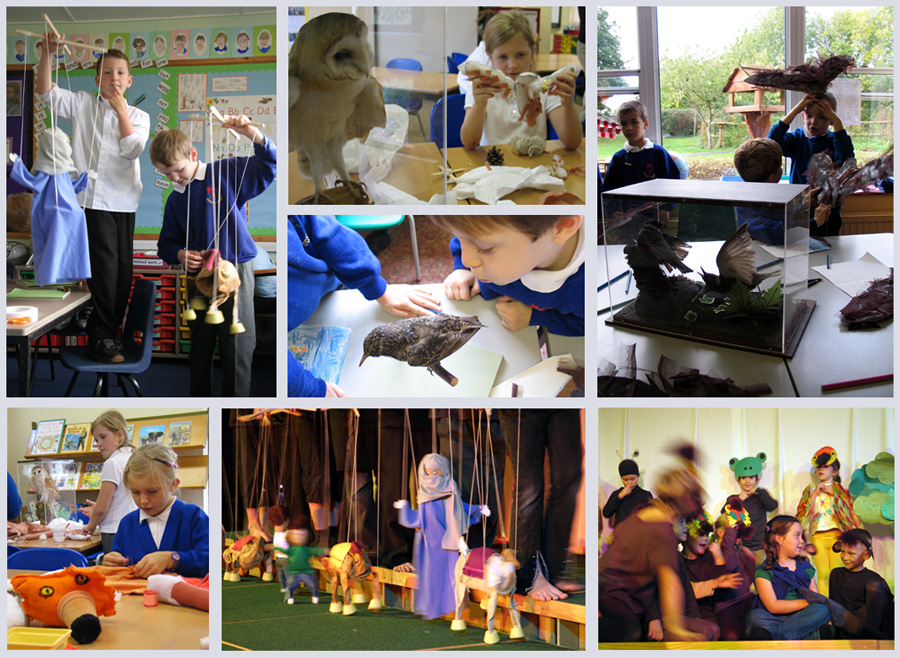 This is another variation on the documenting of artists‘ and performers‘ work, but here instead of completed objects, or performance pieces this is often commissioned to record artists working in school or community settings where there may be no lasting material objects to show. Instead, the outcomes may be an important set of experiences, acquisition of new skills or the discovery of new places. These type of projects are often delivered in a workshop format similar to the photography workshops I run myself. Continue reading
 Liz Milner