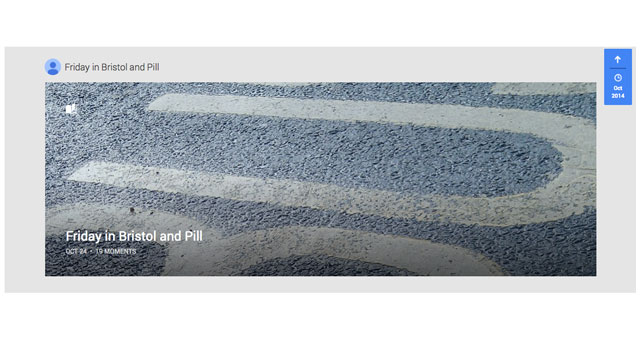
All the features in the recent post (about the application of algorithms to popular online photo sites) have the potential to be ingredients in a story, so what algorithmic tricks might be available to spin your photos, your ‘moments’, into a yarn, automatically? For a start Google Stories can take the effort out of selecting and sequencing your holiday photos, locating them as ‘moments’ on a ‘fun timeline’ with a location …
Author Archives: Liz Milner
‘Halloweenify’ special
Some seasonally spooky examples of the Google+ ‘Halloweenify’ effect (part of Google’s ‘Auto Aweswome’ enhancements as featured in my recent post), if there are faces in the photo that the software can detect they’ll get an undead makeover (or something less scary if you choose the ‘fun effect’), if it can’t recognise a face your image will be transformed into a ghostly scene. Continue reading
‘Auto Awesome’, ‘Interestingness’ and al-Khwārizmī
Following on from recent posts about online software that will automatically arrange your photographs, I’ve been finding what else is going on out there, and discoveries include some odd features as well as the next stage of automation – story construction. This won’t be news for the tech savvy but there may be a few people reading this post who share the same low level of technical comprehension that I have and might find these topics entertaining, if not useful.
What intrigues me about this subject is that somewhere behind all the algorithms there must be teams of human beings involved in identifying and agreeing criteria on which the code is then based. I know little about how this process works (pleased to hear some explanations) and the only personal experience that has any relationship to this goes back to 2000 when I collaborated briefly with a computer science researcher who, for his PhD thesis was working in the field of metadata for image databases and was investigating classification, indexing and retrieval of images. Continue reading
Cardiff photo workshop

The Wales Millennium Centre, opened in 2004 and the Pierhead building, completed in 1897, Cardiff Bay.
A very short-notice photography opportunity turned up for me out of the blue a couple of weekends ago – a sequence of phone calls on Saturday evening led me the next morning to Cardiff Bay to stand in for a workshop leader from Photography Made Simple who’d been taken ill.
Englishness / England – Keep’n it shabby.
Over the last few months I’ve encountered a range of ‘stuff’ – exhibitions, books and articles – that has English written through it like seaside rock; some are featured here, more may follow in future. It seems there’s been increasing debate about this elusive quality of Englishness going on for a while now (centuries really), and clearly there’s been some specific focus on the topic lately – the forthcoming Scotland vote on independence is churning up an awareness of the UK nations; the wild aspirations of our national football team had some people’s blood up for a while in the summer and much was made in the media of the Commonwealth Games a few weeks back – I was intrigued to discover that the English ‘national anthem’ played at the Commonwealth Games was ‘Jerusalem’ – but it’s only now that I seem to have become attuned to the recent output on Englishness.
Letter to an Unknown Soldier
Over the summer I worked on a WW1 Centenary Art Commission project called ‘Letter to an Unknown Soldier’ . It’s part of the 14-18-NOW programme of activities and events and was inspired by the Charles Jagger statue at Paddington station of an unknown soldier reading a letter. The project was produced in association with Free Word and from June to August this year the writers/artists who had originated the project, Kate Pullinger and Neil Bartlett, were inviting everyone across the UK to write letters to the Unknown Soldier to create a new kind of war memorial – made only of words. Continue reading
Oporto photo shuffling
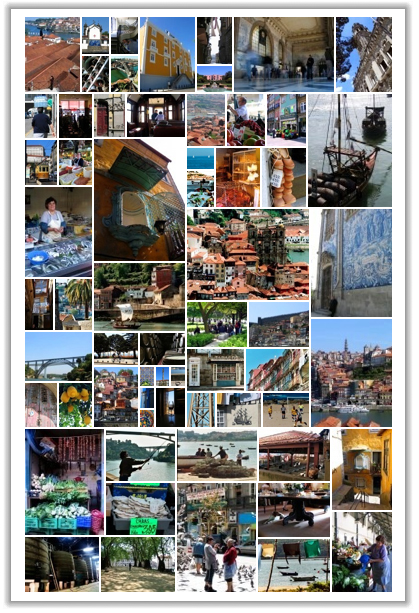
Ten years ago, I was commissioned to create a poster to help mark the 20th anniversary of Bristol’s twinning with Oporto/Porto in Portugal – one of the nicest commissions I’ve ever been asked to do! I had proposed the idea to the Twinning Association way back in the 1980s and it lay dormant for a long time, but the anniversary provided an opportunity that I jumped at. Continue reading
In thrall to spring – enthralled by algorithms.
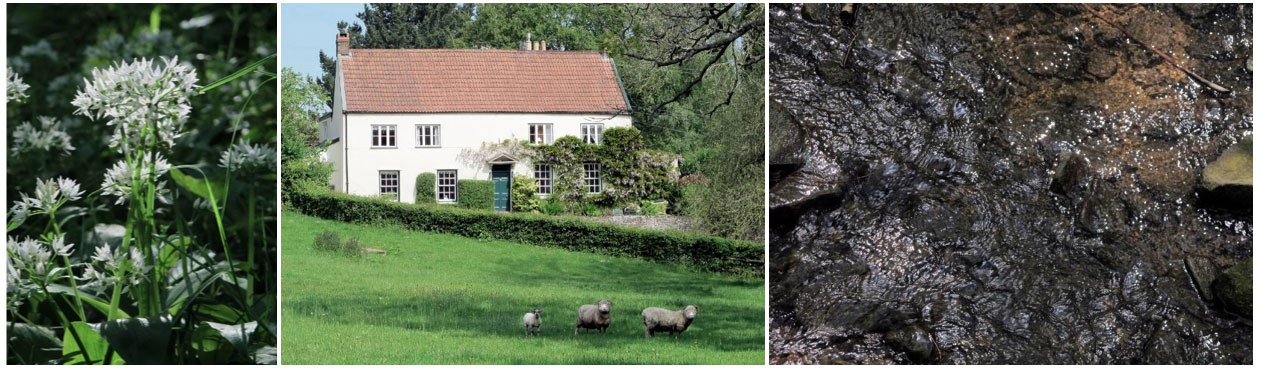
As spring merged into summer this year I found I’d arranged an experimental, and for me, slightly uneasy, alliance between the natural and technical worlds – the outcome is a vernal-themed kind of digital patchwork quilt. Continue reading
7. The Woods, box art – Sticks, signs and leaves at Fringe Arts Bath
I went to the opening of Fringe Arts Bath last night (masses of work to see across the city) where my ‘portable place portrait’ – Sticks, signs and leaves was included in a show called Out of the Box, put together by the charming Tom Buchanan and Amy Douglas. Continue reading
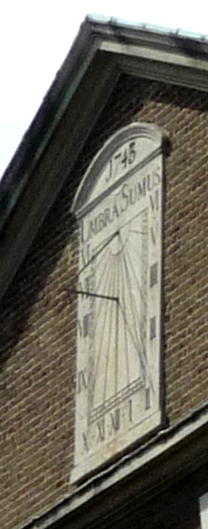
‘Umbra Sumus – We are but shadows’ (or, Down Brick Lane)
I started writing this last summer, not long after a visit to Spitalfields in the East End of London but since it was no more than a record of a day out it seemed a bit pointless. However, it was a very intense and stimulating day that’s stuck in the back of my mind, and since the visit last year some intriguing information about my own and my partner’s family histories has emerged that is closely, and unexpectedly in my case, tied to the locations we visited.
Clearly ours are not the only families to have relatives whose circumstances have sucked them in to London in search of work in difficult times; ours followed the Rivers Lee and various tributaries of the Colne in the late 19th Century from the city’s rural fringes 20 miles away during an agricultural depression, but others came to this London village from 17th century France, 18th century Ireland, 19th century Russia, and 20th century Bangladesh.