The coming of the Catuvellauni
Between the eighth to the first century BCE a series of migrations of people, sometimes referred to as Celtic, or Belgic, came from the coastlines of continental Europe – the North Sea and Baltic regions. These (largely tribal) groups arrived, dispersed and settled in southern and eastern England and gradually further north and west. They merged with, or probably imposed themselves on, the ‘native’ population (also earlier arrivals on these shores, eg the Beaker People who had done the same thing about 1600 years before!) but brought with them more sophisticated iron working technologies, and new styles of design, that led to the production of high status items, and increased trade.
The later Iron Age immigrant tribes also introduced new forms of more complex, larger, settlements, oppida, that became defended trading, political and sometimes ceremonial centres, in contrast to the existing more sparsely populated ‘hill forts’ created by their Iron Age predecessors as defensive locations, seasonal gathering places, or for raising, and protecting livestock; this in turn ushered in a shift of social structures and the growth of the ‘warrior elite’.
Between the 5th and 2nd centuries BCE, one of these tribes, the Catuvellauni (meaning something like ‘expert warriors’), settled in an area north of the Thames that included present-day Hertfordshire and adjacent counties; their tribal capital, an oppidum, was Verlamion (translating as ‘a settlement above the marsh by the Ver’), the town named after the river where there was an important crossing point for several long distance routes. This was the foundation of my home town, though it migrated up the hill {link}away from the valley and became later known as St Albans. In addition to their metallurgy skills, they were successful agriculturalists, growing crops and raising animals (mostly cattle and sheep) but they were also ambitious warriors and became one of the most powerful tribes in Britain.
Cassivellaunus, the tribe’s leader, led the British resistance against Julius Caesar’s second expedition to Britain in 54 BCE, but over the next few decades they developed trading and diplomatic ties with Rome. Nevertheless they put up a strong defence against the Romans when they invaded in 43 CE but their leader Caratacus was conquered and by 50 CE Verlamion had become a Roman municipium and the inhabitants were given Roman rights. The Catuvellauni were keen to add to their territories so were often in conflict with adjacent tribes, such as the Trinovantes whose land they annexed, and who then suffered further losses to the Romans. By 60 CE a strong hostility towards Rome had grown among many British tribes including the Iceni, neighbours and allies of the Trinovantes. This led to a catastrophic retaliation when the Iceni, and allies under the rule of their most infamous, anti-Roman leader, Boudicca, sacked the cities of Londinium, Camulodunum and Verulamium.
“The Iceni flew to arms, and incited to rebellion the Trinobantes and others, who, not yet broken by servitude, had entered into a secret and treasonable compact to resume their independence.” …Tacitus
Ultimately they failed, all of southern Britain eventually becoming a Roman province for over 360 years. But the names of three of the related kings of the powerful Catuvellauni tribe – “Caratacus, son of Cunobelinus, son of Tasciovanus” – echo across the millennia to us in different ways. Caratacus, resistance leader, and his father King Cunobelin (also known as Cymbeline) inspired stories preserved through oral and written tradition from the early mediaeval period onwards, including Shakespeare’s play Cymbeline.
As my research focussed more closely on the Hertfordshire area where the Catuvellauni had settled I was fascinated to learn that the earliest evidence of writing here in Britain, and the first place-name ever recorded, was the name ‘Ver’; Tasciovanus (father of Cunobelin) had silver coins struck in around 25 – 20 BCE here in Verlamion, amongst the first produced in Britain, and bearing his shortened name Tascia, encircling a plump horse, while on the obverse is the word ‘Ver’, the abbreviated name of the oppidum, Verlamiom. See the British Museum © image of the coin here
Trade
The Verlamion oppidum became for a while the capital for the tribe and the important river crossing had allowed trade routes to develop well before the Romans invaded, but the people of the British Isles had already been trading across the English Channel to Continental Europe for thousands of years; I hadn’t been fully aware that my home town had been so connected to distant places for millennia. By the early first century CE, Strabo the Greek geographer reports the Britons exporting the following goods: “grain, cattle, gold, silver, iron, hides, slaves and hunting dogs”, from Wikipedia
Iron
Locally there were important routes leading from two locations within twenty miles of Verlamion, Braughing and Cow Roast, where there is evidence that in around 30 BCE iron ore was being extracted from bogs and smelted at these sites; this discovery came as a surprise, but realising that the complex technical knowledge to smelt and work the iron existed here too was a revelation. The Catuvellauni also had settlements in both these places; “A route for the transport of iron ore across the river [Ver] would lend considerable power to those who controlled the crossing” (Isobel Thompson, Alban’s Buried Towns, 2005? p 38) These iron ore deposits, along with the good quality wheat that grew here, and hides from cattle, probably attracted the Romans to this area.
In awe of ore
Iron gave the era (posthumously) its name, but in practical terms the finished product provided an ‘edge’ that would re-shape the western world. Iron ore was more readily available than the components for making bronze, the dominant metal for thousands of years, and once the technology of smelting iron was refined it could be worked to make more efficient tools for agriculture (allowing cultivation of land previously unavailable) and construction, ornate decorations, and, of course, weapons. It’s easy to glance at a metal object in a museum display with mild admiration, but when you take into account the patience, hard graft and ingenuity required over centuries to go through the trials, failures and adjustments of these complex processes, pass it on and refine it over generations, it becomes an astonishing achievement.
Romanisation
Trade brought goods in the other direction too; arriving on the shores of Britain from across the sea Strabo also records that the Britons were importing “ivory chains and necklaces, amber gems, glass vessels and other petty wares” along with pottery from Gaul (a strong connection seems to have existed between the Catuvellauni and tribes in Gaul), and olive oil and wine from the Mediterranean – thoroughly desirable commodities for the elite of the Iron Age tribes. New ideas, new styles of metalworking, would also travel with the material goods; many tribal kings or leaders would already be familiar with these luxuries through trading, but some young men might also have experienced the opulent goods and sophisticated lifestyles first-hand in Italy via the Roman practice of taking the sons of British chiefs as ‘hostages’ – although it seems there may have been a certain degree of voluntary cooperation.
Once in Rome the youths would learn to read and write in Latin and be educated in Roman laws, customs and religion, become Roman citizens and some were prepared for a role in the army. They were returned to Britain with the expectation that they’d embrace and promote this new way of life and support Roman values and loyalties amongst their tribe. This was a procedure new to me and sounds a typically Roman ploy, akin to radicalisation but it wasn’t always successful, some tribes – even as their sons were being retained as hostages – resisted and rebelled. It’s not clear what happened to their hapless offspring but execution or conscription at a low rank to a remote army posting seems likely. Whatever the means of cultural distribution, the overall influence of Rome had a widespread and lasting impact.
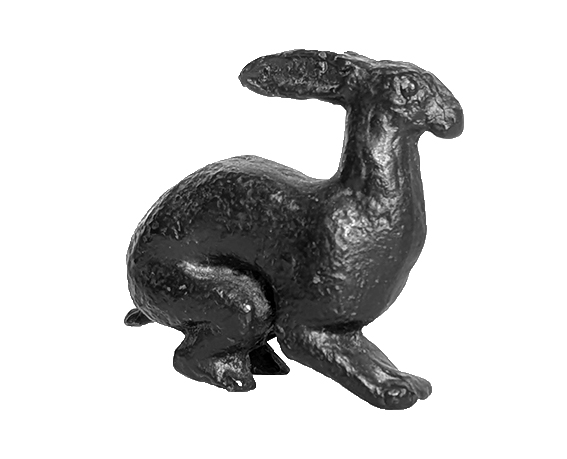
Incidental notes on the status of Hares (just because…!)
“Brown hares and chickens were treated as “gods” not food when they arrived in Britain”, research shows. Hares (and chickens) were introduced to Britain in the Iron Age between the fifth and the third century BCE and were not eaten – until the Romans arrived.
The Boudican revolt: Boudica and the hare: “Cassius Dio says that at the outset [of the rebellion against the Romans] Boudica employed a form of divination, releasing a hare from the folds of her dress and interpreting the direction in which it ran, and invoked Andraste, a British goddess of victory.”

