The fabled Romans, their flaws, and their foes – an introduction to three posts

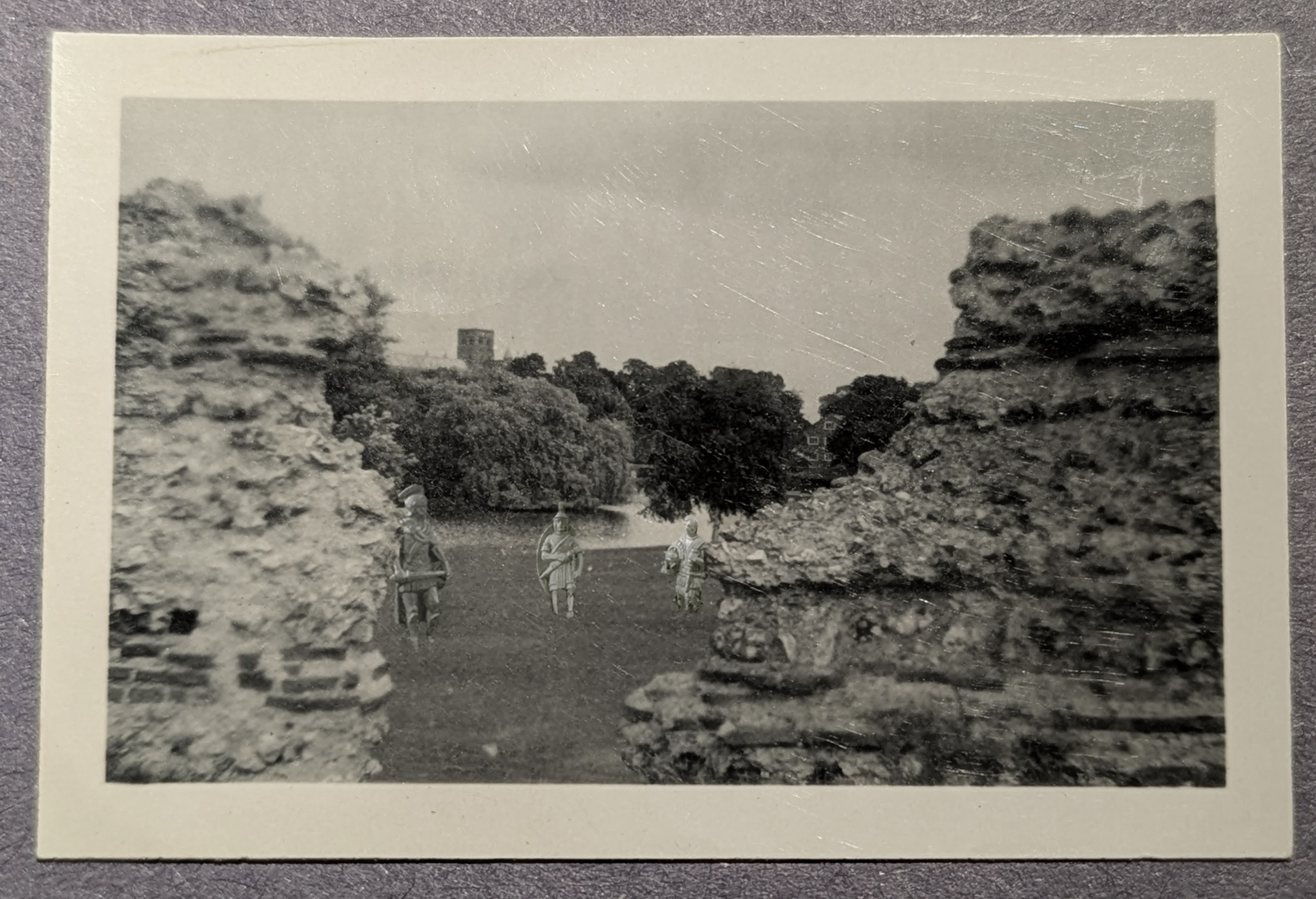
A photo I took on my Brownie 127 camera when I was about 10, of the remains of the Roman Wall of Verulamium, with St Albans Abbey on the hill above, the lake, and some intruders

Although I was steeped in history by my Mum* (practically from birth!), I’m not a historian (and was dismissed, thankfully, from my school Latin class, I loathed it!), so this set of posts make no claims to be anything other than an enthusiast’s exploration of a place where a ruined Roman town became part of my world when I was a child. I know this place very well, it’s where the Roman city of Verulamium once stood, in St Albans (Hertfordshire, England), the town where I was born and lived for the first 25 years of my life.

This trio of illustrated essays are based on my personal relationship with the area, and a growing understanding of the departed Romans – and their predecessors. My own (perhaps idiosyncratic) perspective is supplemented by a fair bit of historical and archaeological reading over the last year, so I hope the essays will offer some thought-provoking entertainment, and maybe even some insights, for others who also find fascination and inspiration in the past.

Continue reading →
“Me and the Romans” – growing up in Verulamium

Remains

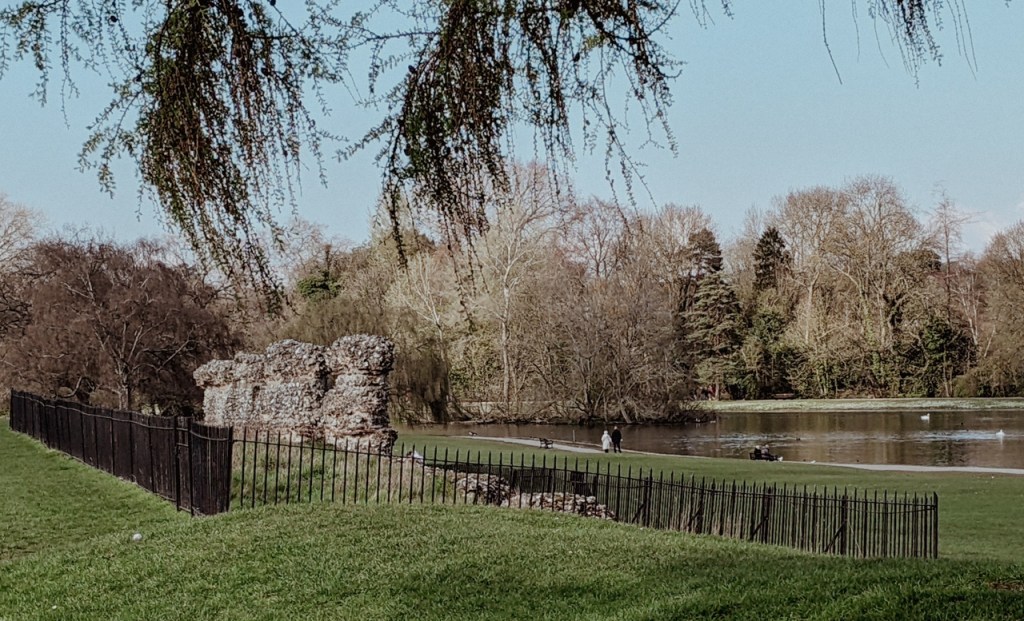
The only remaining free-standing section of the Roman Wall in the park, beside the 1930s’ lake

You couldn’t ignore the Romans if you lived in my home town – St Albans (Hertfordshire, UK) – especially in the area where I spent the first ten years of my life in the 1950s. Although our house was quite new the road in front of it was an ancient track, possibly very ancient; in the 1930s most of it was still a lane and it marked the southern edge of this modest-sized, but expanding city. What would become our neighbourhood had been identified as a location for new housing and during preparations for building, Roman-era cemetery sites were discovered in the vicinity, including one in the fields behind the site of our home-to-be, along with Belgic (Iron Age) ditches and earthworks. After I’d left St Albans in the early 1970s, further house building at the other end of the road revealed additional ancient, historic finds that were excavated and proved to be an important Iron Age cemetery – more of that later.

Continue reading →

Unravelling the Romans

What the Romans did – to vex me; a biased (though considered), personal commentary on their role in my history!

For context from the previous post: at the age of about 9 or 10 a feeling began to surface within me that I really didn’t like the Romans: “from what I’d come to understand they were show-offs, broke their promises and seemed to me to be greedy, cruel bullies – all those qualities I’d been taught weren’t “nice” behaviour! Something about them made me feel uncomfortable.”

Dissing the ancients

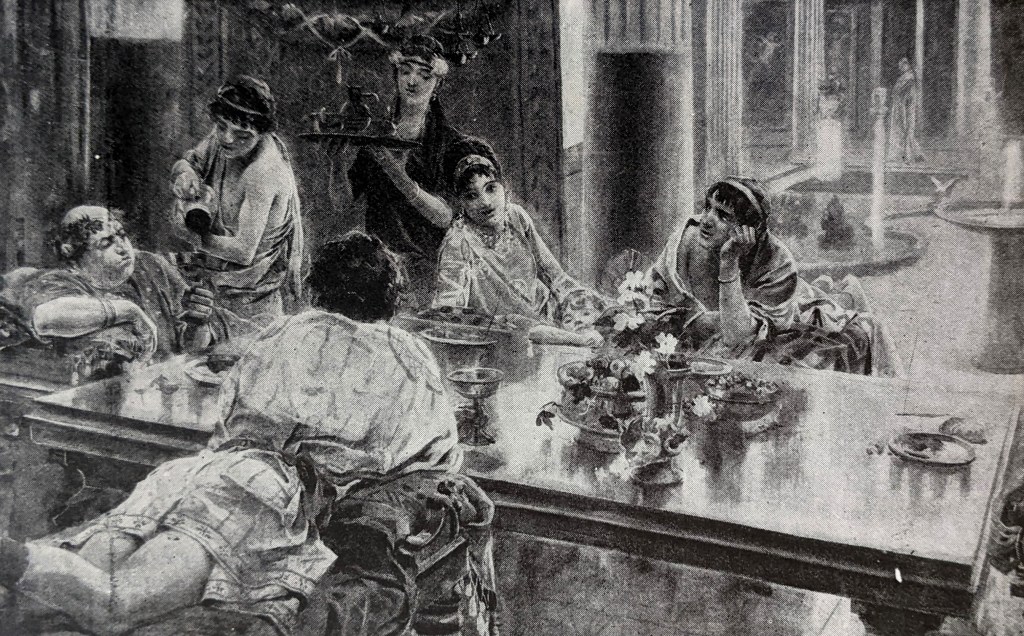
Decadent Roman dining – as imagined from the early 20th Century! From an Edwardian encyclopaedia
Continue reading →

Verlamion: the distinguished ancestor of the Roman upstart, Verulamium

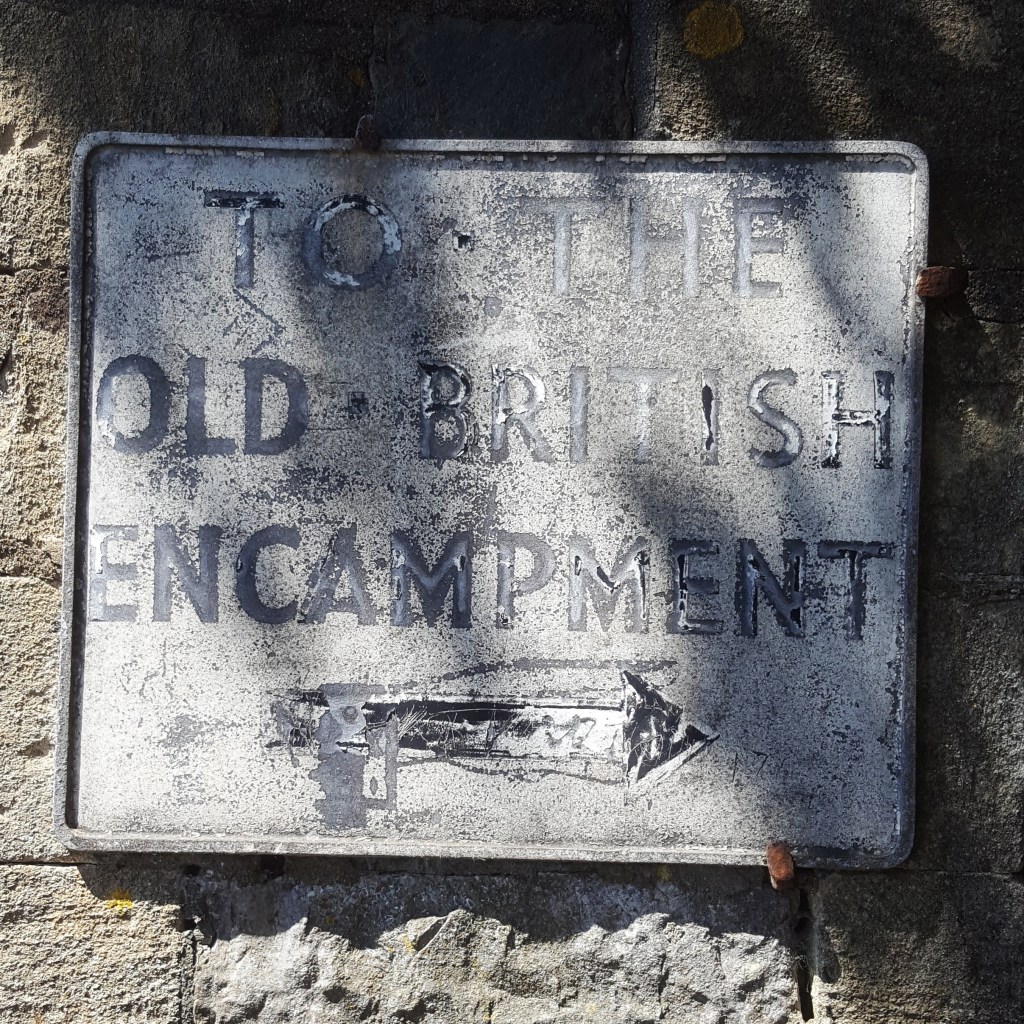
Old sign to Worlebury Iron Age Camp, near Weston-super-Mare.
Photo Liz Milner

Invaders

Eight decades after Julius Caesar’s attempts at invading Britain in 55 and 54 BCE, another invasion was ordered in 43 CE by the Roman Emperor Claudius, desperate for a military triumph to prove his questionable status in Rome. So the Romans came, they saw, but they didn’t actually conquer Britain straight away (or barely at all in the far north), and we largely retained our various native languages.

Continue reading →