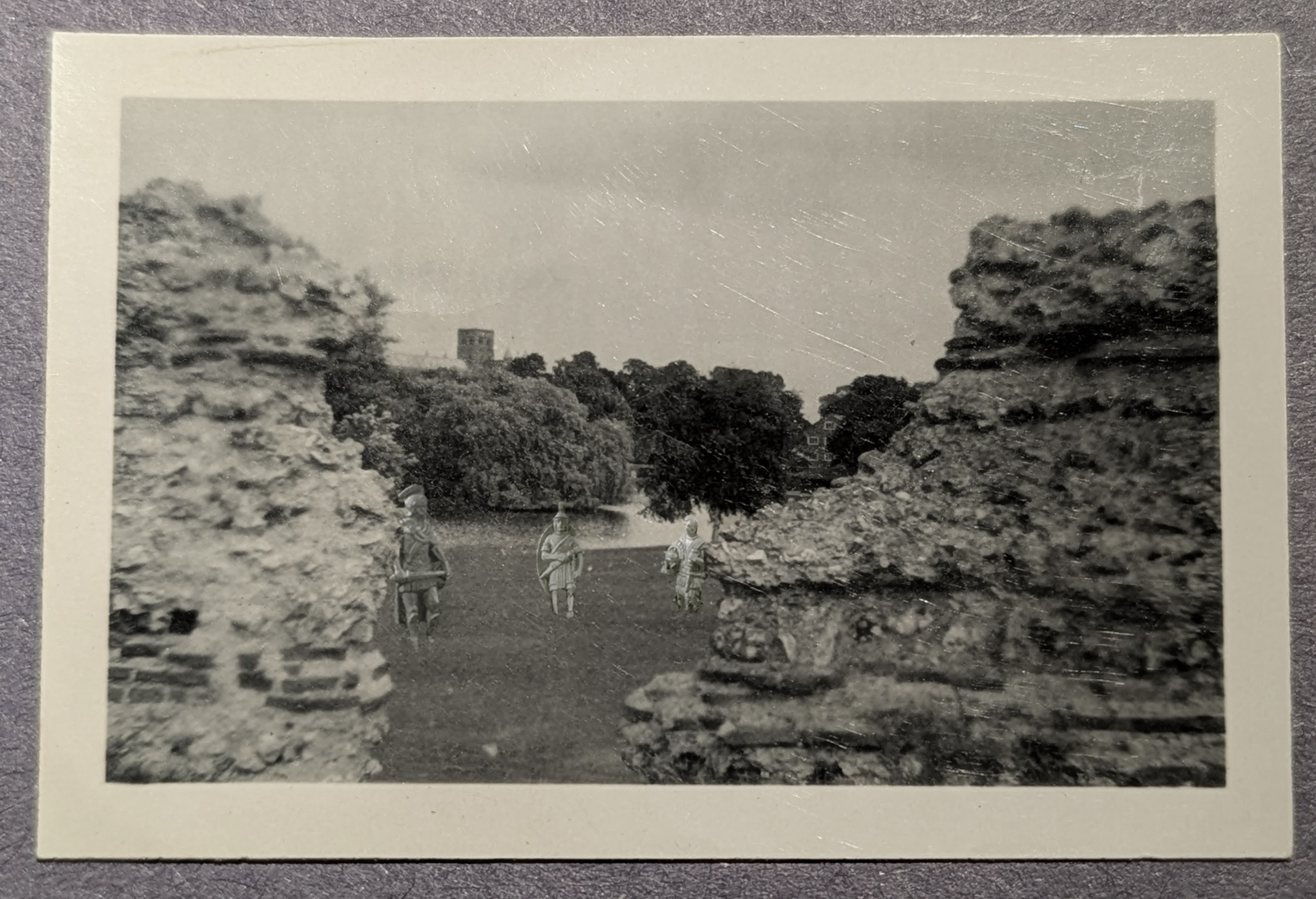
Although I was steeped in history by my Mum* (practically from birth!), I’m not a historian (and was dismissed, thankfully, from my school Latin class, I loathed it!), so this set of posts make no claims to be anything other than an enthusiast’s exploration of a place where a ruined Roman town became part of my world when I was a child. I know this place very well, it’s where the Roman city of Verulamium once stood, in St Albans (Hertfordshire, England), the town where I was born and lived for the first 25 years of my life.
This trio of illustrated essays are based on my personal relationship with the area, and a growing understanding of the departed Romans – and their predecessors. My own (perhaps idiosyncratic) perspective is supplemented by a fair bit of historical and archaeological reading over the last year, so I hope the essays will offer some thought-provoking entertainment, and maybe even some insights, for others who also find fascination and inspiration in the past.
Ducks, geese and an angry queen
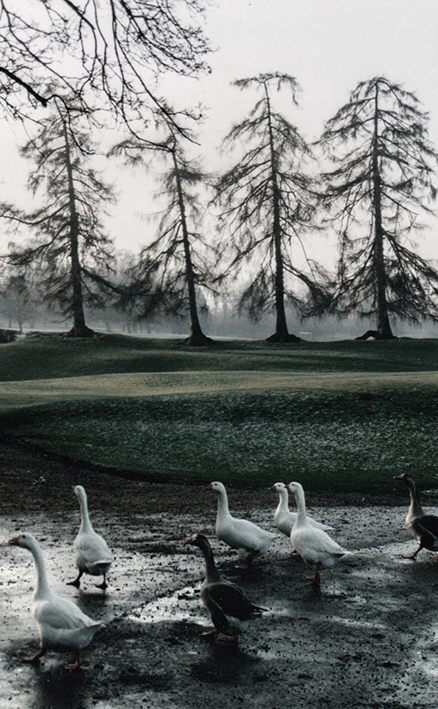
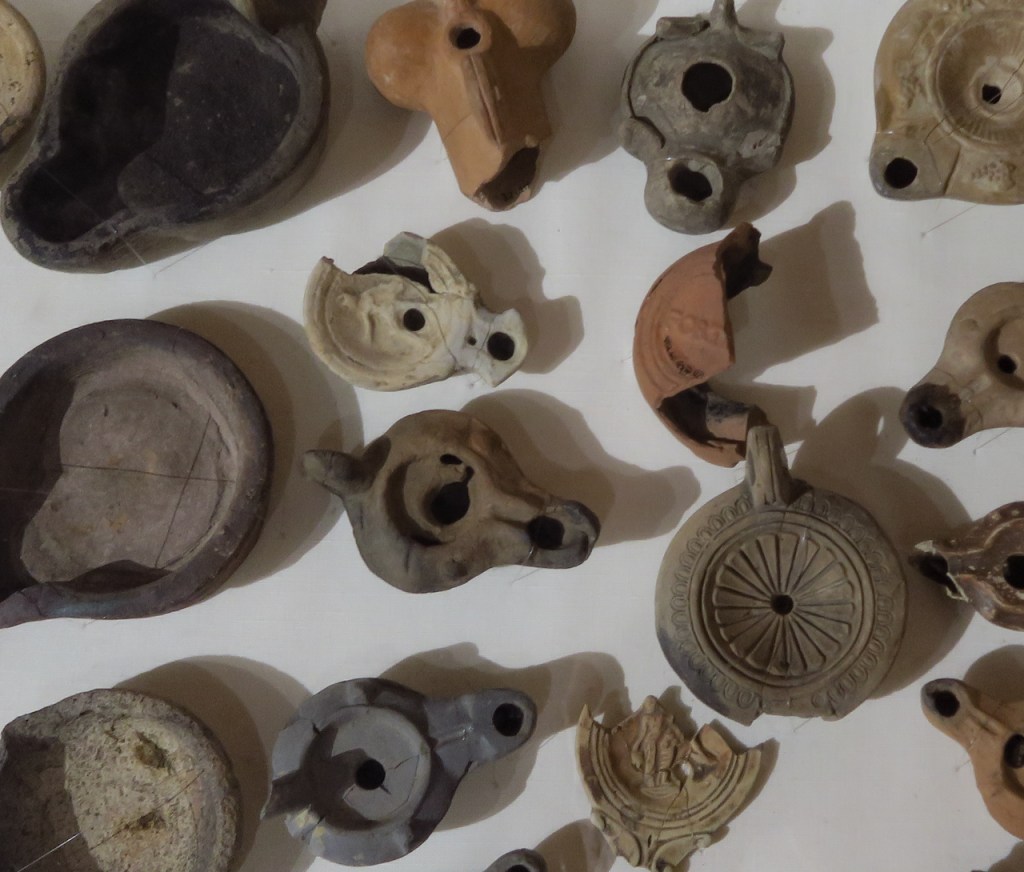
The first post “Me and the Romans – Growing up in Verulamium” looks at how I became aware of the Romans from very early childhood in the 1950s as a regular visitor to a park close to our home with my history-loving Mum; the remains of Verulamium were here in this park beside a lake and the River Ver. We’d take stale bread to feed the various water birds bobbing on the lake (prohibited now, sadly, though understandable), and a net to catch sticklebacks in the river (we put them back!). But on our way to the water we’d pass alongside the remains of the Romans’ flint and brick city walls; we’d often visit the nearby museum too, full of Roman objects – pots and oil lamps, coins and tools, bones and mosaics – but also on show was a section of a wall with charred wood and singed stones from one of many houses in the town set alight in 60 AD, I learnt, by an angry queen who didn’t like the Romans.
This all seemed strange and worrying to me as a little girl…who was this fearsome woman? (Boudica, queen of the Iceni) What had made her so angry? (Betrayal by the Romans) And was she one of the mysterious-sounding Belgae people who I heard had lived here before the Romans ‘arrived’? (No, they were enemies) It wasn’t until a few years later that I understood the Romans hadn’t just wandered peacefully into the Ver valley and settled down, but had invaded Britain, often setting up their grid-pattern new towns within the lands of the people who were already here, such as the powerful Iron Age tribe, the Catuvellauni (the Iceni’s rivals), who had a significant settlement here, an oppidum – a fortified town – from around 25 BCE. But I’ve only very recently learnt about them and have been surprised to discover their town, Verlamion, survived until some years after the Roman invasion. It seems the ending of that era was marked with a spectacular, and very non-Roman, funeral pyre for an important chieftain. These people are the focus of the third post “Verlamion: the distinguished ancestor of the Roman upstart, Verulamium”
Ghosts and gladiators
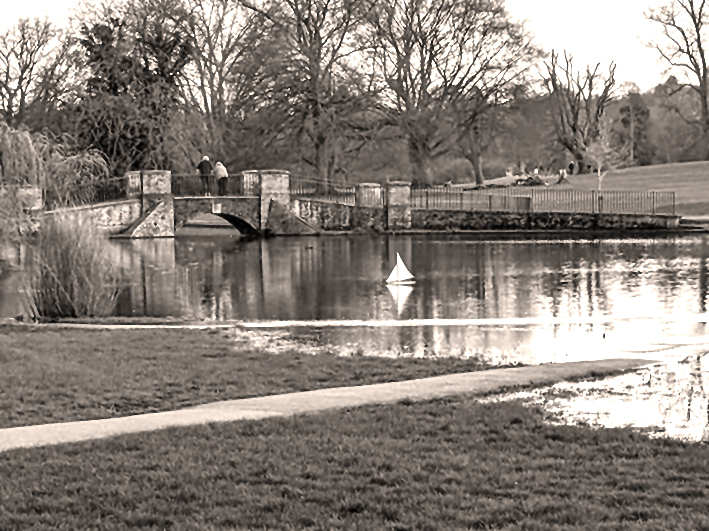
So those visits to the park to blithely feed the ducks, fish for tiddlers, sail a toy boat or skate on the lake, were deeply entwined with the lingering shadows of the ancient settlement, and maybe its ghosts. These long-gone occupants blended with my vague understanding about what the Romans did and how they lived (mostly absorbed from my Mum, and later at school), that had an abiding, though not altogether positive effect on me that I’ve carried for decades.
This is something I examine in the second post “Unravelling The Romans“ that reaches beyond Verulamium to the wider world of Ancient Rome, with observations (based on my recent research discoveries) on various aspects of the Romans and their rule; I ‘ponder’ on Roman attitudes and behaviour, and – for want of a better term – their infrastructure (the Latin equivalent apparently being Opera publica – Public works!), then proceed into, well, a more metaphysical realm! Topics include the impact of their long-distance roads – both on the landscape and on conquered native morale; the extreme entertainments of munera and venatio (gladiatorial and wild beast combat shows); the ruthless destruction of the Druids; the use of architecture and religion as social constraints, and, the introduction of a shift in the ordering of time…the Romans were partial to order and control! Eventually though they lost their power and much of their immense empire fell into decay like the ruins of Verulamium we see now.
Place and memory
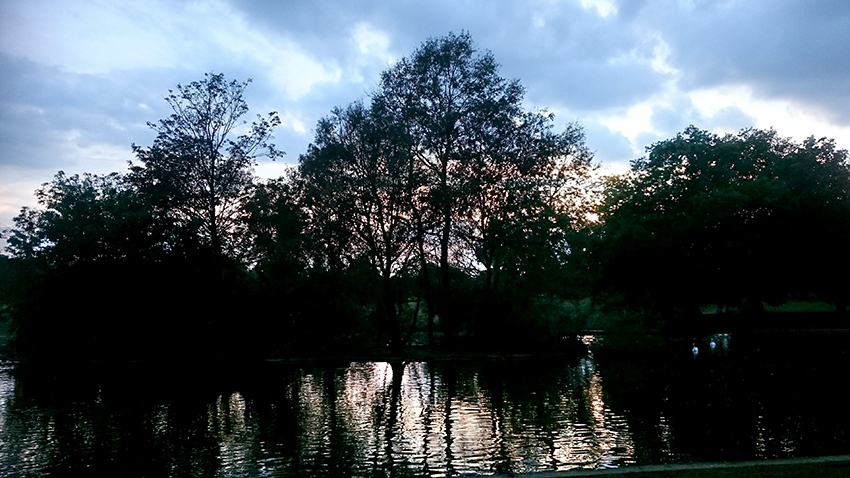
This 20th Century park I knew so well, the once-prosperous Roman town, and Verlamion – the Catuvellauni’s settlement – are, geographically, in the same location, but are they the same ‘place’? People remember places, but do places acquire memories too? My tentative approach to this enigma is to consider that ‘a place’ (an entity with some kind of boundaries, though not necessarily clearly defined), is in constant flux. Not just physically, through amendments to landscapes, but over time also somehow gathering vestiges of memories from people who had lived or passed through the place – people who’d participated in events there, were part of exchanges between groups (whether friendly or hostile), responded to the elements contained by the locale (like a significant building or a source of water); these emotional experiences would become associated with the place, and help build a sense of connection to somewhere the inhabitants wanted, or needed, to be.
Over the years of going to this park I often felt a perceptible connection with it, maybe it was just through personal familiarity, but, perhaps some individuals are able to ‘tune into’ something that emanates from those centuries of accumulated associations with a place? It’s a notion that emerges in the third Verlamion post sparked by learning of the ritual landscape centred around the river valley of the Catuvellauni settlement. (I can hear my Mum saying “esoteric nonsense”!)
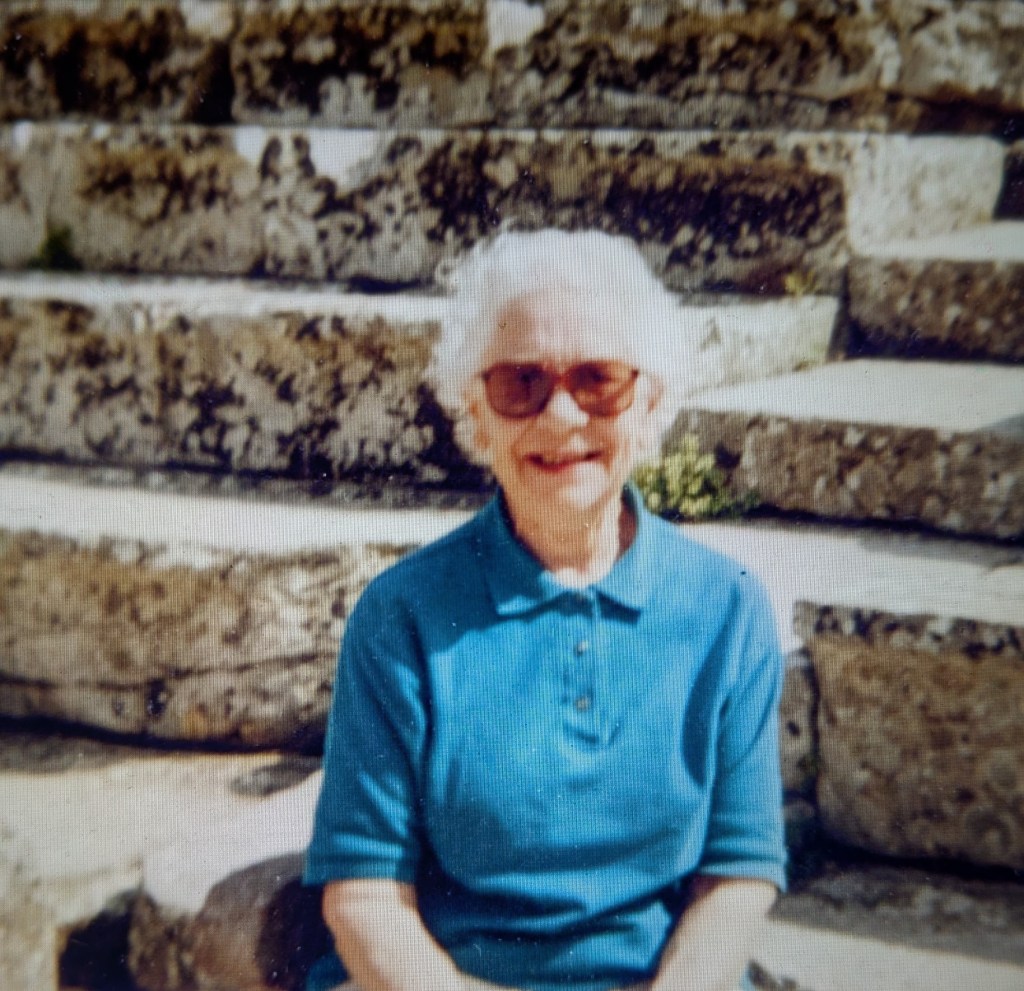
In memory of my Mum
*These posts are dedicated to both my parents, but especially my excellent mother, Pat Lockett (1919 – 2015) who would love to have studied more of the Classical World that was introduced to her by inspiring teachers at her school in St Albans, where she studied Ancient Greek. However, in the later 1930s when she left school, the opportunities were not available for her to go to university, instead she became a Civil Servant until war broke out and she joined the WAAF, eventually becoming a Flight Sergeant Wireless Operator. She and my Dad-to-be (a lover of landscape, another inherited trait?!), an RAF Sergeant Pilot, met at RAF Cranwell technical training college and married just after the war. Women were not allowed to continue working after marriage in the Civil Service at that point, so she became a ‘housewife’ for a while and a few years later, my mother. Although she didn’t get the chance to study her favourite subject in depth, she retained her interest in the topic all her long life and passed on to me (through nurture or genetics?) her love of history, for which I’m hugely grateful; I hope she would have enjoyed these posts.
I’d always understood that my family had lived in St Albans only since the early 1930s when my mother’s parents moved there from Harrow. It wasn’t until after my mother died and I delved more deeply into our family history that I discovered some ancestral connections with the town through my maternal grandmother’s line dating to the 16th century (not as far back as the Romans or Celts though!) My 10th great grandmother was born in St Albans in 1584; her son’s wedding took place in 1635 when he married a local woman in the same church my husband and I were married 340 years later. I’m currently looking at other possible connections via my maternal grandfather’s family too; so maybe these blood ties have helped tether, and retain my attachment to the town even though I’ve not lived there for 50 years.

